

How much does a Medicaid office have to assist in acquiring documents?

By Jill Roamer, JD, CIPP/US on Jan 17, 2019 9:55:00 AM

Medicaid application

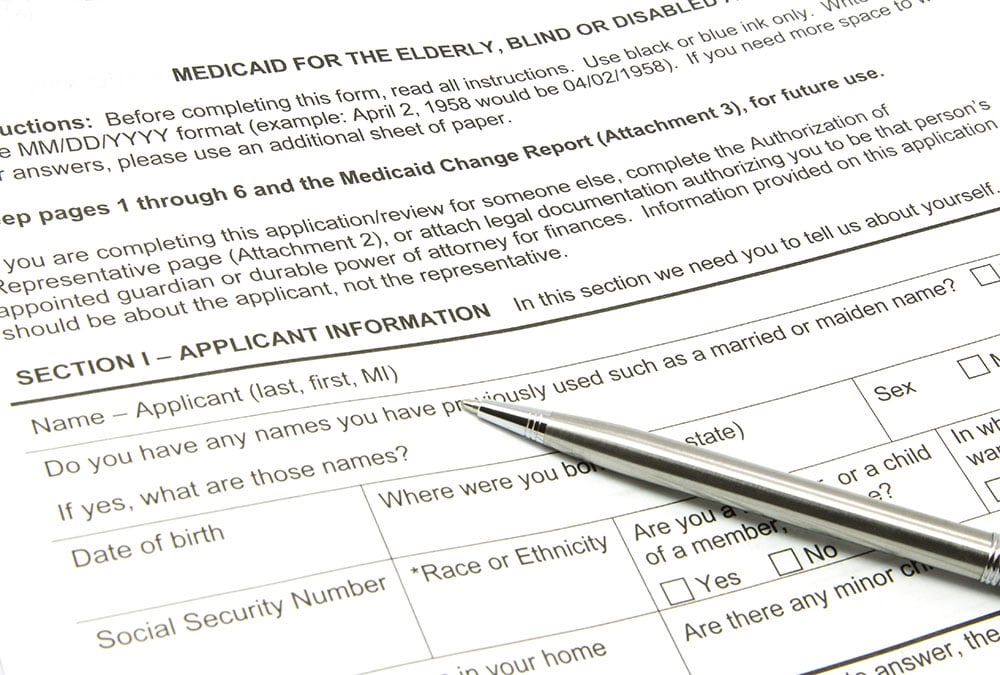
A recent court case out of New Jersey, C.F.J. v. Division of Med. Assistance & Health Servs., highlights the duties of a Medicaid office to help applicants obtain required information. Although this case is non-binding, it is a good reminder of how and when a Medicaid office can help applicants with their documents.

Here, the Medicaid applicant, C.F.J., entered into a nursing home and a Medicaid application was submitted on her behalf. After review of her application, the local Medicaid office requested certain documentation from her, including Direct Express debit card statements from August 2009 to August 2014. C.F.J did not remit those statements, and her application was subsequently denied. C.F.J. once again submitted an application, the Direct Express documents were once again requested and unremitted, and her application was denied.


Continue Reading

From Friend to Fiduciary – Understanding Fiduciary Duties

By Jill Roamer, J.D. and Marchesa Minium, J.D. on Oct 2, 2018 1:22:00 PM

fiduciary-duty

Like so many concepts in the law, the word “fiduciary” has Latin roots; it means trust. This is particularly appropriate, as the word trust is thought of as the confidence and reliability required in a person of great importance – as well as a legal vehicle to develop such relationships.

The list of potential fiduciary positions is rather long, demonstrating that it is quite easy to become a fiduciary for another person. While a fiduciary can be a stock brokerage firm handling the investments of a retiree or a real estate agent selling a home for a client, in the estate planning and elder law context, a fiduciary very commonly comes in the form of a trustee of a trust, an agent in a power of attorney, or as an executor of a will.

When Does One Become a Fiduciary?

Continue Reading

When Should You Recommend the Medicaid Asset Protection Trust to Your Clients?

By WealthCounsel, LLC on May 10, 2018 12:27:00 PM

Medicaid-Asset-Protection-Trust

We've given you a quick comparison of four types of asset protection trusts used in elder law, but we wanted to take it one step further and break down each type into more detail. The first trust we will cover is the most popular trust created in Elder Docx: the Medicaid Asset Protection Trust.

For elder law attorneys, the Medicaid Asset Protection Trust can be a complex asset protection trust to understand. While it has many benefits, there can also be some drawbacks, so it’s important to know when and why you might want to recommend this type of trust to your elder law clients.

While the Medicaid Asset Protection Trust is not for everyone, it can be an effective trust for protecting a family’s financial security in certain circumstances.

Continue Reading
  • There are no suggestions because the search field is empty.