


In the past month, we have seen significant developments in estate planning, business law, elder law, and special needs planning. We have highlighted the most noteworthy developments to ensure that you and your firm stay informed of any changes. From cases addressing the reformation of trusts and Medicaid estate recovery extending to capitation payments to the latest Corporate Transparency Act updates, read on to learn how these developments may impact your practice.
Estate Planning
IRS Creates New Correction Program for IRAs
Rev. Proc. 2026-33 (Oct. 22, 2026)
On October 22, 2026, the Department of the Treasury and the Internal Revenue Service (IRS) issued Revenue Procedure 2026-33, which establishes the IRA Compliance Resolution System (ICRS), as required by the SECURE 2.0 Act of 2022. The ICRS is a correction program that enables individual retirement account (IRA) custodians and owners (including beneficiaries, trusts, and estates holding inherited IRAs) to submit a request to the IRS to correct inadvertent failures resulting from certain enumerated service provider errors to avoid tax penalties. The ICRS is effective May 1, 2027, and there is an open period for public comment through January 20, 2027.
The ICRS also allows an IRA owner and certain others to request a waiver of the requirement to make a rollover to another plan or IRA within 60 days of a distribution from a first plan or IRA. A waiver may be available when an eligible rollover distribution or a distribution from an IRA is not rolled over within 60 days and failure to waive the 60-day requirement would be against equity or good conscience, for example, in the event of a casualty, disaster, or other event beyond the owner’s control. Currently, requests for waivers may be submitted only as private letter ruling requests. Starting May 1, 2027, requests for waivers may be made under the ICRS or by a private letter ruling request; however, beginning in 2028, such requests may be made only via the ICRS. Existing free automatic waiver and self-certification procedures remain available under Revenue Procedures 2020-46, 2016-47, and 2003-16 for taxpayers who miss deadlines for specified reasons.
Takeaways: Estate planning practitioners should keep these new remedies in mind for clients who may be subject to tax penalties due to inadvertent mistakes involving their IRAs. For 60-day rollover failures, existing free options should be explored first if a deadline is missed. However, for taxpayers who cannot use the free options, the ICRS provides a less expensive method of correction than a private letter ruling: the user fees for ICRS submissions—$3,500 for regular individual submissions—are substantially lower than private letter ruling fees (generally $43,700 in 2026).
Delaware Court of Chancery Reforms Woolworth Heirs’ Trusts to Correct Scrivener’s Error and Preserve GST Tax-Exempt Status of Grandfathered Assets
In re Allan P. Kirby, Jr. 2015 Irrevocable Trust for the Benefit of Milan S. Kirby, C.A. No. 2026-1198-RUA (Del. Ch. Oct. 20, 2026); In re Allan P. Kirby, Jr. 2015 Irrevocable Trust for the Benefit of Coray S. Kirby, C.A. No. 2026-1202-RUA (Del. Ch. Oct. 20, 2026); In re Allan P. Kirby, Jr. 2015 Irrevocable Trust for the Benefit of Coray S. Kirby, C.A. No. 2026-1204-RUA (Del. Ch. Oct. 20, 2026)
In 2015, Allan P. Kirby, Jr. created irrevocable Delaware trusts (the Trusts) for the benefit of his children, Milan Kirby, Coray Kirby, and Jessie Lee. The Trusts held two types of assets: contributions from Allan’s own property, which were not exempt from generation-skipping transfer (GST) tax, and, after Allan died in 2020, assets added through his exercise of a limited power of appointment over a trust created under the will of his mother, Marian Sutherland Kirby (the MSK Trust). Because the MSK Trust was established before the GST tax took effect, it was grandfathered and exempt from GST tax.
The Trusts gave the children two powers of appointment. First, each of the Trusts included a testamentary general power of appointment in Article One over assets derived from Allan’s contributions and expressly excluded the MSK Trust assets. However, in Article Five, the Trusts gave the children a general power of appointment to consume, invade, or appropriate trust property, not limited by an ascertainable standard, without a similar exclusion. If the power of appointment contained in Article Five applied to the MSK Trust portion of the Trusts, those assets could be included in the children’s gross estates for estate tax purposes, causing that portion of the Trusts to lose the GST tax-exempt protection and become subject to otherwise avoidable transfer taxes. The error was discovered in 2023, when a lawyer reviewing an identical trust established by Allan for one of his other children noticed the omission; the chancery court had previously granted reformation of that trust in April 2025.
On September 14, 2026, the Trusts’ sole trustee, PGB Trust & Investments of Delaware, petitioned the Delaware Court of Chancery to reform Article Five ab initio to provide that the general power applies only to assets derived from Allan’s own contributions and does not apply to assets contributed from the MSK Trust. The petitions relied on the court’s equitable authority to reform trust instruments, including Roos v. Roos, 203 A.2d 140 (Del. Ch. 1964), which recognized that a trustmaker’s unilateral mistake in drafting the trust instruments and its resulting failure to accurately reflect the trustmaker’s intent can justify reformation if proved by clear, convincing evidence. The petitions also noted that Treasury Regulation section 26.2601-1(b)(4)(i)(C) provides that a judicial construction to correct a scrivener’s error will not cause a GST tax-exempt trust to lose its status if the action involves a bona fide issue and is consistent with applicable state law.
To show Allan’s intent at the time the Trusts were executed, the trustee offered the evidence of contemporaneous correspondence reflecting the understanding that the MSK Trust assets would pass free of GST tax because the trust was grandfathered; a 2026 affidavit from Allan’s estate planning attorney during the drafting process stating that Allan did not intend to give his children a general power of appointment over the MSK assets; and other trust provisions evidencing an intent to preserve GST tax-exempt status.
On October 20, 2026, the court granted the petitions and ordered that the Trusts be reformed ab initio and held under the terms of the reformed and restated trust agreements attached to the petitions.
Takeaways: The Kirby orders illustrate that a court may use its equitable powers to correct a scrivener’s error that threatens the GST tax-exempt status of part of an irrevocable trust when the existing trust terms are inconsistent with the trustmaker’s intent at the time of its execution. Reformation of a trust operates ab initio, that is, it is retroactive and alters the language of the trust instrument as of the date of its execution rather than as of the date of the court’s order or any other postexecution date; therefore, a successful reformation to correct an error can effectively eliminate any undesired tax consequences that have already resulted from the error and the trust can be administered as if the error never existed. Practitioners should preserve thorough drafting files and consider obtaining affidavits from trustmakers while they are available as evidence of their intent.
In contrast to reformation, a nonjudicial modification generally would not provide such a corrective effect because it is a prospective remedy that takes effect as of the date of the agreement. However, in the event of a court-ordered modification of a trust, the court may specify that the modification has retroactive effect.
Estate planning attorneys should review each power of appointment in a trust holding both exempt and nonexempt assets to confirm that the exempt portion is carved out. Keep in mind that trusts created contemporaneously for the same client may contain the same error.
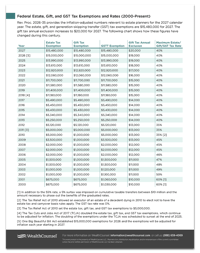 |
2027 Federal Tax Rate & Exemption Guide Download the consolidated Federal Estate, Gift, and GST Tax Exemptions & Rates: Quick Reference Guide and gain fast access to key transfer tax data from 2000 to present. |
Elder Law and Special Needs Planning Law
Granddaughter Stated Claim for Tortious Interference with Expectancy of Inheritance; Exoneration Clause in POA Did Not Shield Agent’s Bad-Faith Conduct
Sabin v. Newcomb, No. Fra-25-550, 2026 ME 103, 2026 WL 3168100 (Me. Oct. 22, 2026)
In early 2022, as Steven Sabin began experiencing cognitive decline, he executed a will and a financial power of attorney (POA). Steven’s will nominated his daughter Janice and his stepson Shawn as joint personal representatives. His will also provided that his granddaughter, Darby, would receive the share her deceased father, Paul, would have received. The POA appointed Shawn as Steven’s agent and gave him broad authority, including the power to transfer any property revocably or irrevocably and to make gifts to anyone, including himself, regardless of whether the gift was consistent with Steven’s prior wills or giving patterns. The POA also exonerated Shawn from most liability for his actions as agent except for breaches committed with dishonesty, improper motive, or reckless disregard for the POA’s purposes.
In mid-2022, family members, including Darby, began caring for Steven in his home, and Steven’s wife, Christine, moved to a memory care facility. Steven’s stepdaughter, Cynthia, soon insisted that Steven move into a senior living facility so that her son, Owen, could live in Steven’s home. Steven objected, but a year later he was moved to a facility. Owen moved into the home almost immediately, paying below-market rent.
Christine died in February 2024. In March 2024, Shawn listed the home for sale with a real estate agent for $225,000, although he had already agreed to sell it to Owen for far less. The home was then sold to Owen for $105,000, with a $5,000 seller credit. Shawn deposited the proceeds in a bank account owned jointly by him, Cynthia, and Steven, enabling the funds to pass to Shawn and Cynthia upon Steven’s death rather than into his estate. After Steven died in June 2024, Shawn and Cynthia split the sales proceeds and claimed that none of it remained. Steven’s baseball card and antique coin collections disappeared, and Darby was not named as a payable-on-death beneficiary on investment accounts.
Darby filed a lawsuit against Shawn, Cynthia, and Owen, asserting claims for tortious interference with an expectancy of inheritance, constructive trust, conspiracy, and punitive damages. The defendants moved to dismiss for failure to state a claim, and the trial court granted the motions. Darby appealed.
The Maine Supreme Judicial Court vacated the dismissal. The court first noted that, under Maine’s notice pleading standard, it is only necessary for a complaint to give the defendant fair notice of a claim through a short and plain statement showing that the pleader is entitled to relief. The court determined that Darby’s complaint effectively asserted a cause of action for tortious interference with an expectancy of inheritance.
The elements of tortious interference with an expectancy of inheritance are (1) the existence of an expectancy; (2) intentional interference through tortious conduct such as fraud, duress, or undue influence; (3) a reasonable certainty that the expectancy would have been realized but for the interference; and (4) resulting damage. The court held that, at the pleading stage, it was sufficient that Darby’s complaint identified the source of her expectancy—her status as Steven’s grandchild and the provisions of the will—and various items, including her share of the value of the house, that the defendants had diverted. The court determined that it could take judicial notice of the provisions of Steven’s will that entitled Darby to an equal share of the residuary estate because the parties had conceded that point at oral argument.
Cynthia and Owen argued that the allegations were insufficient because the house could have been transferred to anyone during Steven’s lifetime. Therefore, Darby could not show that she would have inherited but for their tortious interference. The court rejected that argument, relying on Harmon v. Harmon, 404 A.2d 1020 (Me. 1979), which held that an inheritance does not need to be irrevocable to support a tortious interference with an expectancy of inheritance claim: It is only necessary that there be an expectation, not a certainty, of an inheritance. The court noted that the transfer of the house during Steven’s lifetime at a grossly reduced price prevented him from changing his mind about who should receive an inheritance and diminished what Darby would otherwise have expected to receive from his estate.
Finally, the court rejected the defendants’ argument that the POA’s exoneration provisions shielded them from liability. Under Maine’s POA statute, an agent’s duty to act in good faith cannot be waived by a POA. Further, an exoneration clause does not relieve an agent of liability for a breach committed dishonestly, with an improper motive, or with reckless indifference to the POA’s purposes. The court found that Darby had sufficiently pleaded that the defendants had acted in bad faith: (1) listing the home for sale to create an appearance of propriety when the decision to sell it to Owen at more than a 50 percent discount had already been made was dishonest; (2) placing the proceeds in a jointly owned account to keep them out of Steven’s estate and in the hands of Shawn and Cynthia was both dishonest and motivated by self-enrichment; and (3) failing to name Darby as a payable-on-death beneficiary on investment accounts showed reckless indifference to the POA’s purpose of carrying out Steven’s wishes, as reflected in his will, that Darby receive an equal share of his estate. The court vacated the judgment of dismissal and remanded the case for further proceedings.
Takeaways: The Sabin decision held, under Maine law, that transfers made by an agent during a principal’s lifetime can give rise to a tortious interference with an expectancy of inheritance claim even if the principal could have made the same transfers freely before death. In addition, it is a reminder that broad gifting authority and exoneration language in a POA may not insulate an agent from liability for dishonest or self-interested transactions. Estate planning and elder law attorneys should counsel clients who grant broad powers to an agent, particularly where the agent is also a fiduciary under the will or a potential beneficiary, about these limits and the importance of monitoring transactions the agent undertakes if possible. Attorneys representing agents should advise them to document the reasons for transfers of a principal’s property and to avoid transactions that benefit the agent or their family members at the expense of a principal’s intended beneficiaries.
Claimant Challenging Medicaid Waiver Rule Need Only Show a Burden, Not a Substantial Burden, on Religious Exercise in Free Exercise Claim
Alsyrawan v. Dep’t of Hum. Servs., No. 87 MAP 2024, 2026 WL 3026487 (Pa. Oct. 5, 2026)
Mohamad Alsyrawan is a nonverbal adult with Down syndrome and autism who requires constant supervision and assistance with daily activities. He lives with his mother. His mother and sister, who are practicing Muslims, are his primary caregivers. In 2016, the Pennsylvania Department of Human Services (the Department) approved him to receive 133 hours per week of companion and in-home community support services under its Medicaid Home and Community-Based Services Consolidated Waiver program, which is designed to help individuals with an intellectual disability or autism live more independently in their homes and communities. Mohamad’s mother and sister were each approved to be paid for care that together exceeded 60 hours per week. The same year, the Department adopted the 40/60 Rule, which capped the weekly hours for which relatives and legal guardians could be paid at 40 hours for a single caregiver and 60 hours for multiple caregivers. The rule allowed exceptions only for emergencies or the unplanned departure of a scheduled worker and for no more than 90 days in a fiscal year.
Mohamad’s mother requested a permanent exception on his behalf on the basis that Mohamad adhered to Islamic law, which prohibits unrelated males from providing certain personal care to Mohamad, and that her religious beliefs prohibited her from being alone with an unrelated male. She asserted that, without an exception, she and Mohamad’s sister would continue to provide all of his care without pay for hours above the cap because she could not allow Mohamad to sin. The administrative law judge denied the request, finding that unrelated caregivers could provide care in ways consistent with the family’s beliefs, and the Department’s Secretary upheld the decision. Mohamad appealed, arguing that the denial violated the free exercise clause of the First Amendment to the US Constitution and Pennsylvania’s Religious Freedom Protection Act (RFPA). The Commonwealth Court found that the 40/60 Rule was not generally applicable but held that Mohamad first had to prove that the rule substantially burdened his religious exercise. Applying the RFPA’s definition of substantial burden, it concluded that he had not done so and rejected both claims.
The Pennsylvania Supreme Court, in its majority opinion, reversed and remanded, holding that the Commonwealth Court erred by grafting the RFPA’s substantial burden requirement onto Mohamad’s constitutional claim. The court explained that a showing of a substantial burden was required before the US Supreme Court’s decision in Employment Division v. Smith, 494 U.S. 872 (1990), and is still required under the RFPA. However, Smith and subsequent US Supreme Court decisions, including its most recent relevant decision, Mahmoud v. Taylor, 606 U.S. 522 (2025), as well as several federal circuit decisions, consistently refer only to a burden—not a substantial burden—on religious exercise. The court abrogated several of the Commonwealth Court’s contrary decisions and found that its own decision in Commonwealth v. Stewart, 690 A.2d 195 (Pa. 1997), addressed only a statutory RFRA claim and did not apply to a constitutional claim under the free exercise clause.
The court held that, in the context of government benefits, a litigant establishes a burden by showing a forced choice between receiving a benefit and abiding by their religious beliefs. For a free exercise claim, the correct standard of review—strict scrutiny or rational basis—is determined by assessing whether a burden—not a substantial burden—results from a policy that is not neutral or generally applicable. If a litigant demonstrates that a policy is not neutral or generally applicable, the litigant is entitled to relief unless the government can satisfy strict scrutiny by showing the policy was justified by a compelling state interest and narrowly tailored to pursue that interest. The court ruled that the Commonwealth Court erred by requiring Mohamad to prove a substantial burden on his religious practice under the free exercise clause. Thus, it reversed its order and remanded the case for further proceedings consistent with its opinion.
In a dissenting and concurring opinion, Justice Wecht agreed with the majority’s threshold analysis but would have vacated and remanded, noting that the parties had stipulated that the Department previously granted an individualized exception in similar circumstances, which bears on general applicability. In a separate dissenting and concurring opinion, Justice Mundy stated that she would have decided the merits; held that the rule is neutral and generally applicable, satisfies rational basis review, and does not impose a substantial burden under the RFPA; and affirmed.
Takeaways: The Alsyrawan decision clarifies the threshold for constitutional claims under the free exercise clause. Elder law and special needs planning attorneys whose clients receive Medicaid waiver services may be able to establish a burden by showing that a program rule forces the client to choose between the benefit and adhering to the client’s religious beliefs. However, the decision does not resolve the merits of the case: On remand, the lower court must apply the forced-choice burden standard; the court did not review its earlier finding that the rule is not generally applicable. In Pennsylvania, attorneys should plead constitutional and RFPA claims separately because the RFPA still requires a substantial burden. In addition, they should develop the record on any exceptions the agency has granted, because a claimant seeking strict scrutiny bears the burden of showing that a rule is not generally applicable.
Medi-Cal Estate Recovery Limited to the Value of Health Care Services Received and Does Not Extend to Excess Capitation Payments
Phillip v. Baass, No. B341853, 2026 WL 3033514 (Cal. Ct. App. Oct. 9, 2026)
Theodosia Phillip lived in a nursing care facility and received Medi-Cal benefits from October 2010 until she died in 2015. The California Department of Health Care Services (the Department) paid $261,957.40 in capitation payments (a risk-sharing arrangement under which Medi-Cal makes monthly prospective payments to managed care plans to cover the projected cost of a member’s medical care) to CenCal Health (CenCal), Theodosia’s managed care plan. CenCal paid Theodosia’s health care providers $106,672.71 for Medi-Cal services provided to her. After her death, the Department sought $407,774.41 in estate recovery: the full $261,957.40 in capitation payments, $5,852.30 in Medicare Part B premiums, and $139,964.71 in interest.
Theodosia’s trustee challenged the Department’s estate recovery claim, and the Department filed a lawsuit. Two of Theodosia’s beneficiaries cross-complained on behalf of themselves and others similarly situated, seeking declaratory relief and a writ of mandate compelling the Department to limit its estate recovery claims to the amounts paid for “health care services received” by Medi-Cal recipients under California’s estate recovery statute, section 14009.5 of the California Welfare and Institutions Code. The trial court certified a class of Medi-Cal members and their estates against whom the Department sought to recover capitation payments exceeding the amount paid for health care services received, i.e., excess capitation.
The trial court ruled that estate recovery of excess capitation violated section 14009.5 and 42 U.S.C. § 1396p(b)(1), and that its ruling applied retroactively. It entered judgment in favor of the Department limited to the amount Theodosia’s plan paid for her health care services plus prejudgment interest, entered a declaratory judgment in favor of the beneficiaries and the class limiting its estate recovery to amounts paid for health care services received, and issued a writ of mandate requiring the Department to stop collecting excess capitation and to reprocess certain class claims. The Department appealed.
The California Court of Appeal affirmed. The court noted that under the managed care model used by approximately 95 percent of Medi-Cal members, the Department pays a fixed monthly capitation payment to a managed care plan for each member, whether or not the member receives any services. A member may therefore receive services worth less than the capitation rate. In a de novo review of section 14009.5, the court noted that the Department’s estate recovery formula depends on the version of the statute in effect at a recipient’s death. Although a prior version of the statute applied to Theodosia and others who died prior to January 1, 2017, the court examined both the prior and current versions because the class included Medi-Cal members who died both before and after that date.
Under the former version of section 14009.5, the Department was required to claim against a decedent’s estate “an amount equal to the payments for the health care services received.” Health care services were defined by reference to specific listed benefits, such as hospital, nursing facility, and dialysis services, and did not mention premiums or capitation payments. The current version of the statute limits estate recovery to the health care services required to be collected under federal law (as set forth in 42 U.S.C. § 1396p(b)(1)(B)(i)): medical assistance consisting of nursing facility services, home and community-based services, and related hospital and prescription drug services. The court held that, under the plain language of both versions, excess capitation is not recoverable because it is not tethered to the health care services actually received. A contrary conclusion would require the court to rewrite the statute.
The court also found support in Pottgieser v. Kizer, 906 F.2d 1319 (9th Cir. 1990), in which the Ninth Circuit held that premiums are not recoverable medical assistance, and distinguished In re Estate of Ecklund, 20 N.W.3d 351(Minn. 2025), a Minnesota Supreme Court decision allowing the state of Minnesota to recover the actuarially determined portion of capitation attributable to the cost of the Medicaid recipient’s long-term care services.
The court concluded that, even if the statute were ambiguous, its legislative history would support the same result. The legislative history never mentioned the recovery of excess capitation; none of the statute’s six amendments referred to premiums or capitation; and the 2016 amendments narrowed, rather than expanded, recovery.
The court also ruled that the Department’s regulation, California Code of Regulations title 22, section 50961(c), was void. The regulation provided that an estate recovery claim includes all payments made by Medi-Cal on behalf of a decedent, including payments to managed care plans; thus, on its face, the regulation included excess capitation, which is paid to managed care plans. The court determined that the regulation impermissibly enlarged the scope of its enabling statute by allowing recovery of amounts not equal to the payments for health care services received and, thus, was invalid.
In addition, the court rejected the Department’s argument that federal law required recovery of excess capitation, noting that mandatory federal estate recovery is limited to the categories of medical assistance listed in 42 U.S.C. § 1396p(b)(1)(B)(i), which do not include excess capitation. Further, the court held that the federal State Medicaid Manual is nonbinding federal guidance and the Department cannot rely on it to implement a rule that is inconsistent with California’s unambiguous statute.
The court affirmed the lower court’s judgment.
Takeaways: The Phillip decision limits Medi-Cal estate recovery to payments for health care services actually received, rather than to the full capitation payments made to a managed care plan. Because most Medi-Cal members are enrolled in managed care, the decision could significantly reduce estate recovery claims. The decision is distinguishable from the Minnesota Supreme Court’s decision in Ecklund, which applied Minnesota law and permitted the state’s Medicaid agency to recover the full actuarially limited portion.
In Phillip, the relief was provided to the entire class and the court voided DHCS’s regulation, so the impact of the decision may be substantial. Elder law practitioners representing the estates or beneficiaries of deceased Medi-Cal members should review estate recovery claims to determine whether they are based on full capitation payments and should challenge excess capitation. The Department could appeal, so California practitioners should monitor the case for further developments.
Business Law
US Supreme Court Declines Review of Cases Challenging Constitutionality of CTA; Lawsuit Challenges FinCEN Final Rule
Tex. Top Cop Shop, Inc. v. Blanche, 758 F. Supp. 3d 607 (E.D. Tex. 2024), cert. denied, No. 25-1290, 2026 WL 2976622 (U.S. Oct. 5, 2026); Nat’l Small Bus. United v. Bessent, 161 F.4th 1323 (11th Cir. 2025), cert. denied, No. 25-1201, 2026 WL 2976364 (U.S. Oct. 5, 2026); Oregon v. Bessent, No. 6:26-cv-2359 (D. Or. Oct. 27, 2026)
On October 5, 2026, the US Supreme Court denied petitions for certiorari in Texas Top Cop Shop, Inc. v. Blanche and Nat’l Small Bus. United v. Bessent, in which the petitioners challenged the constitutionality of the Corporate Transparency Act (CTA), asserting that it violated the Commerce Clause and the Fourth Amendment.
On October 27, 2026, the District of Columbia and 20 states filed a lawsuit in the United States District Court for the District of Oregon, State of Oregon v. Bessent, challenging the final rule issued on August 13, 2026, by the Financial Crimes Enforcement Network (FinCEN), which permanently eliminates all beneficial ownership information (BOI) reporting requirements for US persons—beneficial owners, company applicants, and legal entities—under the CTA. The lawsuit asserts that, in implementing the final rule, the Department of the Treasury violated the Administrative Procedure Act by using the final rule to repeal the CTA through exemptions.
Takeaways: Under the final rule, domestic entities are currently not required to comply with CTA reporting requirements. However, attorneys advising small businesses should be aware that, unless the CTA is repealed or ruled unconstitutional by the US Supreme Court, those requirements could be reimposed in the future if the final rule is successfully challenged or if a future administration withdraws it. The reporting obligations that were previously imposed on domestic entities—and the risk of fines, penalties, and imprisonment for noncompliance—largely impacted millions of small businesses, as many larger entities were excluded from the definition of a reporting company. See our September 2026 monthly recap for additional discussion of the final rule.
California Court of Appeal: Arbitration Agreement Required as Condition of Employment Is Unenforceable When the FAA Does Not Apply
Molina v. Triumph Residential Servs., Inc., No. B350252, 2026 WL 3167633 (Cal. Ct. App. Oct. 22, 2026)
Tiffany Molina worked for Triumph Residential Services, Inc., a Los Angeles-based property management company, from approximately April 2023 to September 2024. In November 2024, Tiffany filed a class action complaint against Triumph alleging wage-and-hour violations under the California Labor Code and unfair business practices under California Business and Professions Code section 17200. Triumph moved to compel arbitration of Tiffany’s individual claims, dismiss the class claims, and stay the action. Triumph and Tiffany agreed that California law, not the Federal Arbitration Act (FAA), governed the arbitration agreement.
Tiffany opposed the motion, arguing that California Labor Code section 432.6(a) prohibits employers from requiring employees, as a condition of employment, to waive any right, forum, or procedure for a violation of the Labor Code or the California Fair Employment and Housing Act. Section 432.6(f) provides that nothing in the statute is intended to invalidate a written arbitration agreement that is “otherwise enforceable under the Federal Arbitration Act.” Triumph argued that nothing showed that the agreement was a condition of Tiffany’s employment and that the agreement stated she signed it “freely and voluntarily.” It argued that the agreement was voluntary because Tiffany was free to accept it, negotiate out of it, or seek other employment. Tiffany asserted that section 432.6(a) prohibits compelled arbitration of claims under the Labor Code in the absence of preemption under the FAA. The trial court denied the motion, finding that Triumph had not met its burden of proving that the agreement was valid and enforceable and had not provided evidence that its employees were not required to sign the arbitration agreement as a condition of employment, and that section 432.6 invalidates such arbitration agreements when they are governed by California law. Triumph appealed.
The California Court of Appeal, Second District, reviewed the order de novo. The court first considered whether an arbitration agreement formed in violation of section 432.6(a) because an employer required it as a condition of employment that is not otherwise enforceable under the FAA may nonetheless be enforced by the employer. Triumph argued that under section 432.6(f), illegally formed agreements are enforceable even when the FAA does not apply. The court disagreed, finding the statute unambiguous: Under the plain language of the statute, the exception in subdivision (f) allowing the enforcement of illegally formed agreements is limited to agreements “otherwise enforceable under the” FAA, and courts may not imply additional exceptions where the legislature has specified a limited one.
The court also held that this result was compelled by the legislative purpose underlying section 432.6—preventing employers from compelling employees to sign an arbitration agreement as a condition of employment—and more specifically, the purpose of subdivision (f), which was designed to avoid federal preemption; the court noted that this effort failed when the Ninth Circuit held in Chamber of Commerce of the United States v. Bonta, 62 F.4th 473 (9th Cir. 2023), that the FAA preempts section 432.6 when the FAA applies. It was therefore not plausible that the legislature intended to permit employers to enforce illegally formed agreements when federal preemption is not at issue, i.e., when the agreement is governed solely by California law and not by the FAA. The court distinguished Bonta because it was a case in which the FAA did apply. It declined to follow federal district court decisions that had relied on Bonta to hold that a violation of section 432.6 did not render an arbitration agreement unenforceable under California law, without addressing why subsection (f) excepts only arbitration agreements subject to the FAA. Thus, the court concluded that when an arbitration agreement is not subject to the FAA, it may not be enforced under California law if it violates section 432.6(a).
The court then held that Triumph’s own submissions established a violation of section 432.6, regardless of which party bore the burden of proof. Triumph had argued that the arbitration agreement had been provided to Tiffany as part of the hiring and onboarding process and that she “was free to accept the Arbitration Agreement, attempt to negotiate out of it or look for other employment.” Molina v. Triumph Residential Servs., Inc., No. B350252, 2026 WL 3167633, at *2 (Cal. Ct. App. Oct. 22, 2026). The court held that the choice between accepting the agreement and seeking other employment was simply another way of stating that arbitration was a condition of employment. The option to negotiate out of the agreement also violated the statute because section 432.6(c) deems an agreement that requires an employee to take affirmative action to preserve their rights to be a condition of employment. Further, Triumph’s statement that Tiffany could negotiate out of the arbitration agreement implied that she would be required to give up something to avoid signing it: This would violate section 432.6(b), which prohibits retaliation and discrimination against a prospective employee who does not sign an arbitration agreement. Therefore, the court affirmed the denial of the motion to compel arbitration.
Takeaways: Under the Molina decision, an arbitration agreement signed by an employee as a condition of employment is unenforceable under California law where the FAA does not apply, although the Bonta court held that section 432.6 is preempted when the FAA does apply. In situations in which California law governs, attorneys should advise employers that merely including language in an arbitration agreement stating that the employee’s signature is “voluntary” will not establish its enforceability when the employee’s practical choice is to sign it or not be employed. Employers must be able to provide evidence that employees are not required to sign the agreement—and are not required to give up anything in exchange for declining to sign it. An opportunity to negotiate out of the arbitration agreement, which implies that the employee would have to give up some type of benefit to which they otherwise would have received in exchange for not signing it, is likewise prohibited under California law. Attorneys representing California employers should review arbitration agreements and onboarding practices and be prepared to submit evidence addressing section 432.6 when moving to compel arbitration where the FAA does not govern the agreement.