




Written by Ryan Snow, JD, MBA
As an estate planning attorney, you are familiar with the complexities of wealth transfer. When your clients are small business owners, their business is often their most significant asset, but the company’s illiquidity and operational demands can present unique challenges. Business succession and exit planning, while distinct from traditional estate planning, are crucial for ensuring the smooth transition and continued value of this critical asset.
This article outlines key considerations and strategies for estate planning attorneys advising business-owner clients. A well-prepared attorney can provide immense value to their clients by helping them navigate these complex issues.
Understanding the Difference: Succession Planning Versus Estate Planning
While they are often intertwined and should be carefully coordinated, business succession planning and estate planning are not the same.
Estate planning typically addresses the full range of a business owner’s assets, including the business itself, and considers how to handle them upon the owner’s death or incapacity. It focuses on the owner’s financial security, lifetime asset transfers, and desired distribution among heirs, whether or not they are involved in the business.
Succession planning, in contrast, is more narrowly focused on the business itself. Its primary goal is to ensure a successful transition to new ownership and to convert an illiquid business asset into cash for the owner’s retirement, disability, or death. It addresses the future financial needs of the departing owner, the preparedness of new owners, and the overall survival and growth of the business. A business without a viable succession plan may lose all its value, leaving little to be distributed by an estate plan, so business succession planning is critically important.
The Benefits and Goals of Succession Planning
Succession planning is a vital process for any business owner. The goal of succession planning is to understand, preserve, and ultimately pass on the value of the business. This process can involve a variety of strategies, from simply naming a family member to take over to completely overhauling the business structure to meet long-term objectives.
A thoughtful and strategic succession plan can offer several key benefits: ensuring the survival and future growth of the business or its assets, preserving harmony within family-owned businesses by clearly defining roles and expectations, reducing or eliminating estate and income taxes, facilitating a smooth retirement for the current owner, and allowing the owner to retain control of the process rather than leaving decisions to be made by others in the event of the owner’s illness or death.
Defining the End: Starting with the Owner’s Story and Goals
Effective succession planning is not a one-size-fits-all solution; it is a deeply personal journey that begins with understanding the business owner’s unique story, motivations, and aspirations. Defining their “end of the story” is crucial because it sets the foundation for all subsequent planning. This process involves a comprehensive exploration of several important elements. . .
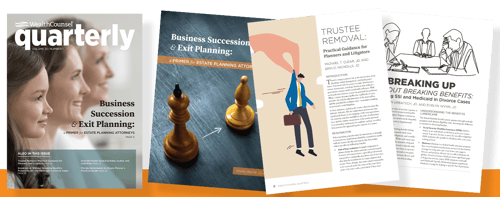
Continue reading the full article for free by downloading the full issue of the WealthCounsel Quarterly—the legal magazine for estate planning and elder law attorneys!

.png)